
Rocks to Soil
If you’ve ever walked into a police station break room or a fire station bay as a brand-new chaplain, you know that immediate, palpable chill. It isn't personal; it's self-preservation. First responders live in a hyper-vigilant world where outsiders are viewed with natural skepticism. You can’t just walk in and drop a heavy spiritual truth on someone and expect it to take root.
In my years watching successful chaplains navigate these environments, I’ve realized that building trust in public safety looks a lot like planting a Biblical vineyard.
Look at Isaiah 5:2. Describing the preparation of a vineyard, the text says the farmer “…dug it up and cleared out its stones, and planted it with the choicest vine." Notice the order of operations. You don't throw delicate seeds onto a field covered in jagged rocks. You have to clear the ground first, layer by layer.
The Big Boulders: Institutional Skepticism
As a new chaplain, you are stepping onto a field full of massive boulders. These are the deep-seated defenses: "Is this chaplain going to preach at me?" "Are they here to judge how I cope?" "Are they just looking for a badge, a wannabe?” “Am I going to be the Sunday sermon topic?”
The best chaplains I’ve observed don't try to roll these boulders away with big speeches. They clear them simply by showing up. You clear the boulder of "judgment" by sitting at the table during shift change, being present at training, drinking terrible station coffee, and keeping your mouth shut while you listen. You clear the boulder of "preachiness" by learning their language, understanding what a Code 5 or Code 10 means, tracking fire ground apparatus terminology, and respecting the rhythm of their shift.
The Medium Rocks: Personal Hesitation
Once the big institutional skepticism dies down, you hit the medium rocks. This is individual hesitation. A firefighter or officer might wave hello, but they keep conversations strictly to the weather or last night's game. Maybe they stop talking when you walk into the room. Sometimes, they may even intentionally drop an “f-bomb” to see how you will react or whether you will judge them. They will test you.
As an officer, I once had a chaplain leave after we returned to the station with a mountain of evidence, because he knew I was going to be tied up for a long time. In that moment, I knew the chaplain was not there for me; he was there for the ride-along experience.
You clear the rocks of hesitation through sheer availability. Paul wrote in 1 Thessalonians 2:8 about being delighted to share not only the gospel but "our lives as well." Successful chaplaincy is a ministry of presence. It’s riding shotgun on a grueling 2 AM call, standing in the freezing rain at a crash scene without complaining, or better yet bringing the coffee for everyone on scene. It’s being around when nothing dramatic is happening, proving you are not there to be entertained. It’s also just grabbing a pen helping grind through the mountain of evidence. When they see you consistently sharing their environment, sharing their experiences, not backing down from the hard things, those medium rocks start getting tossed over the fence.
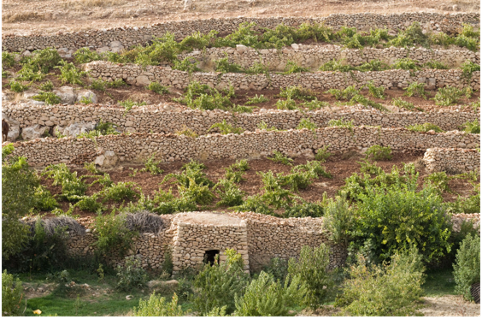
Ancient terraced vineyard required backbreaking clearing of stone before planting…Source Klenger
The Gravel: Deep-Seated Guardrails
Even when a responder likes you, the gravel remains. This is the fine, gritty layer of personal cynicism, trauma, and institutional fatigue that every first responder carries. The gravel is what wears down one’s spirit. It takes patience to sift through the gravel; it’s messy work. It requires earning the right to be heard by proving you are safe, confidential, and steady.
Reaching the Soil: Cultivating Impact That Reproduces
Only after you’ve patiently cleared the boulders, the rocks, and the gravel do you finally reach the rich, dark soil underneath.
This is the shift where an officer pulls you aside in the hallway and says, "Hey chap, my marriage is struggling. Got a minute?" Or when a paramedic who hasn't spoken ten words to you in six months asks you to sit with them after a tough pediatric call.
When you reach the soil, you’ve been integrated into the culture. You become culturally competent, understanding their vocabulary, understanding their rough personal edges, understanding the daily grind, their struggles, and the organizational pain points. Yet , as an example, you rise above it all, not engaging in the toxicity but able to speak life and truth.
When you reach this place, you are no longer “the chaplain"; you are “their chaplain.” The chaplains I trusted the most earned their time, their presence, and my respect through consistency. Ultimately, they earned my trust, and I allowed them to speak truth into my life.
The seeds of encouragement, presence, and hope you plant don't just stay with that one person. They reproduce. A supported responder becomes a better partner, a more grounded spouse, and someone who tells the rest of the crew, "Talk to the chaplain. They get it."
You can't rush the soil. Grab your gloves, get dirty, get comfortable with the heavy lifting, and take the time to clear the rocks. Remember John 15:1, Jesus says, “I am the true vine, and my Father is the gardener.” This work is a partnership with the Father. Be patient and let God work through you. The harvest down the road is more than worth the labor.
From Rocks to Soil
by Jeff Strossner